Don’t forget Namibia! Stay in touch…
This site is protected by reCAPTCHA and the Google Privacy Policyand Terms of Service apply.
The semi-nomadic ovaHimba people will often pack a few items in a small bag and hang it on a stick that they carry over a shoulder. These little bags, called okamutenge, are considered essential for long journeys into the wilderness of north-western Namibia.
Okamutenge is therefore a perfect description of a new anti-poaching project by the ovaHimba-owned tourism company, Conservancy Safaris Namibia (CSN). This intervention will help the communal conservancies that own the company to better conserve their wildlife and ultimately increase their tourism revenue.
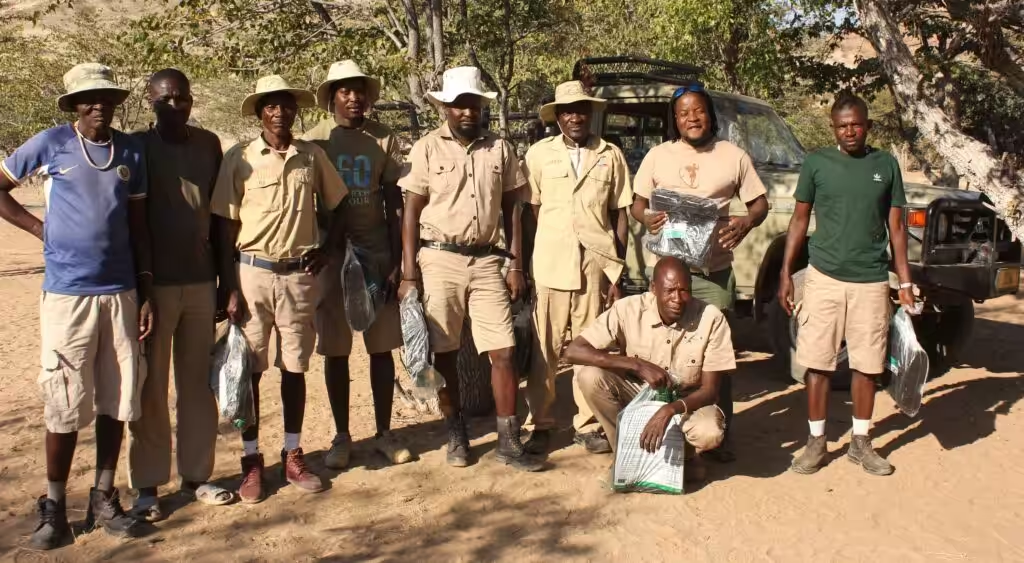
The community game guards in Orupembe Conservancy were the first to request support for their patrols. Their conservancy vehicle, which had been donated by CSN 15 years ago, had been worn out on the rough roads that characterise Namibia’s Kunene Region. Without a reliable 4×4 vehicle, game guards can only patrol near their homes, leaving the areas far from villages vulnerable to poachers.
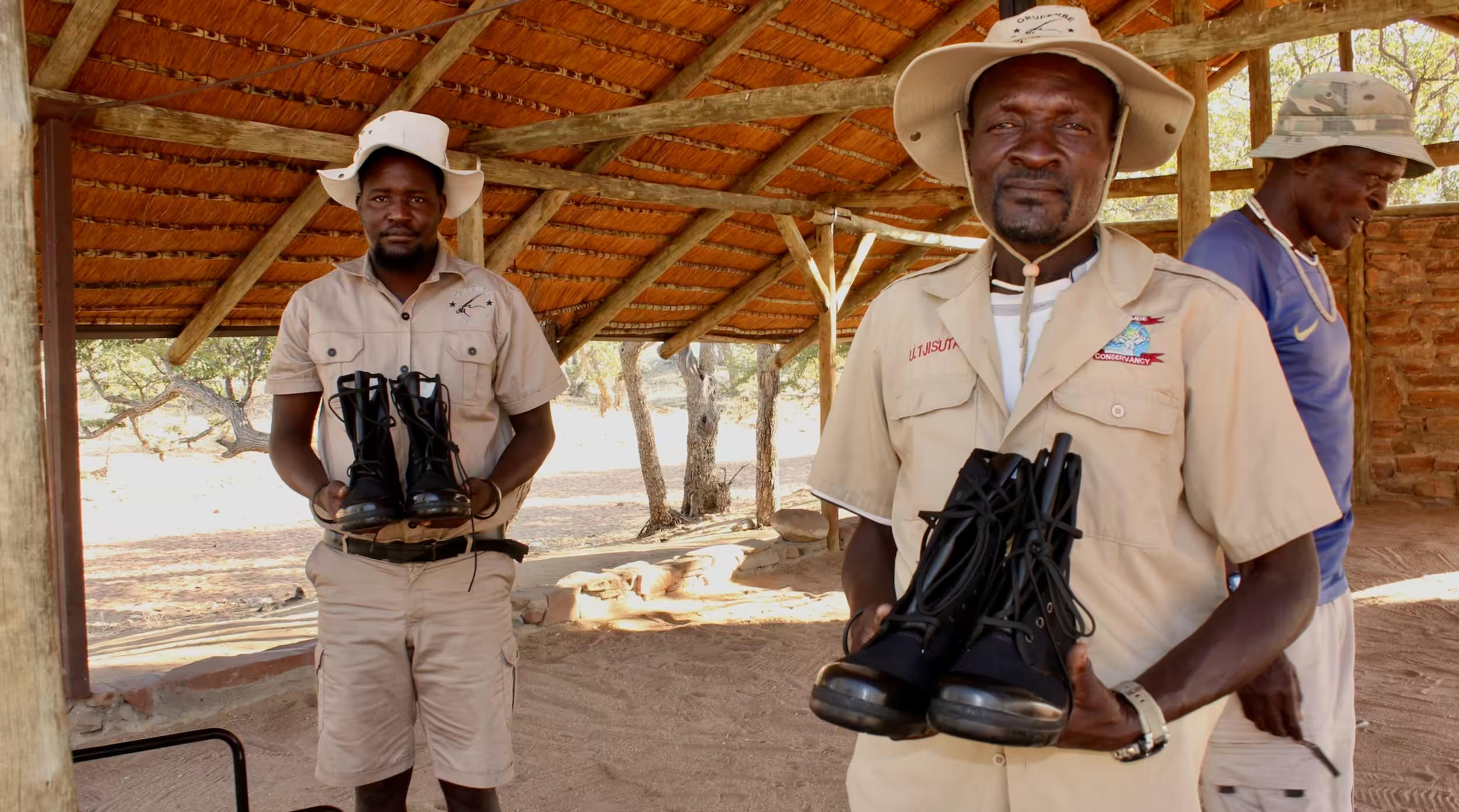
The game guards were especially concerned after the recent good rains that broke a multi-year drought. Wildlife populations are starting to rebound, but their recovery will be severely hampered if poachers take advantage of the limited anti-poaching presence. Okamutenge therefore started in mid-2025 with an old Land Cruiser borrowed from CSN’s Etaambura Lodge and a modest budget for equipment (e.g. boots for game guards) and patrol food.
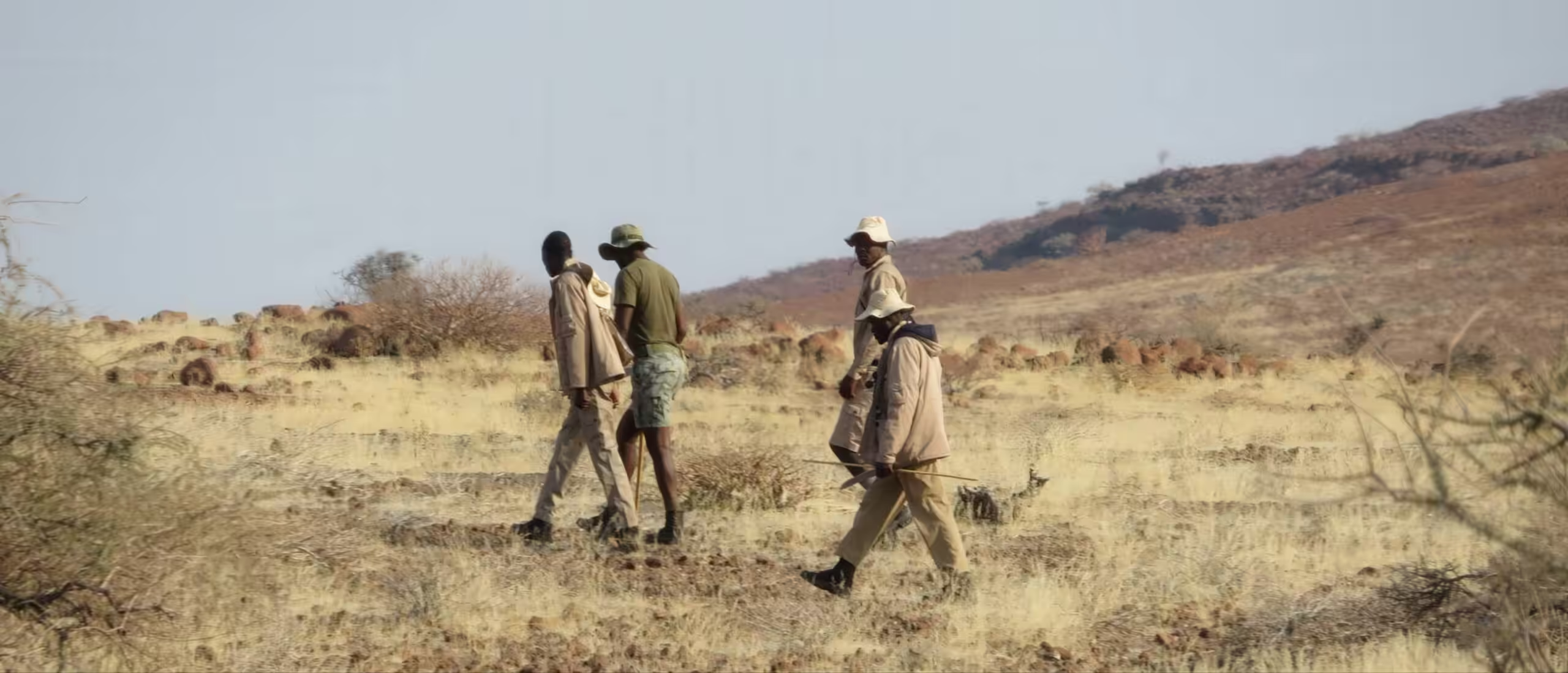
The project has been a catalyst to re-start regular patrolling by all five north-western conservancies, an area covering over 13,000 km2. Boas Hambo, CSN’s head guide and an experienced conservationist, has brought together all parties, including the Ministry of Environment, Forestry and Tourism (MEFT) and community leadership.
A model for tourism supporting community conservation, Okamutenge has already made a difference. In October 2025, the patrol team caught four poachers with Oryx meat, who were arrested by the Orupembe police (game guards cannot arrest people by themselves). While on patrol, the team visits local farmers to make them aware of this new anti-poaching effort. This deterrent effect is harder to measure, but is even more important than arrests because it stops poaching before it happens.
Since CSN is owned by five conservancies, their patrols cover multiple conservancies at once, including game guards from each of them. Conservancies are more effective when they share information and coordinate their patrols with their neighbours. The inclusion of MEFT officials further strengthens the spirit of collaboration, which is vital to long-term success.
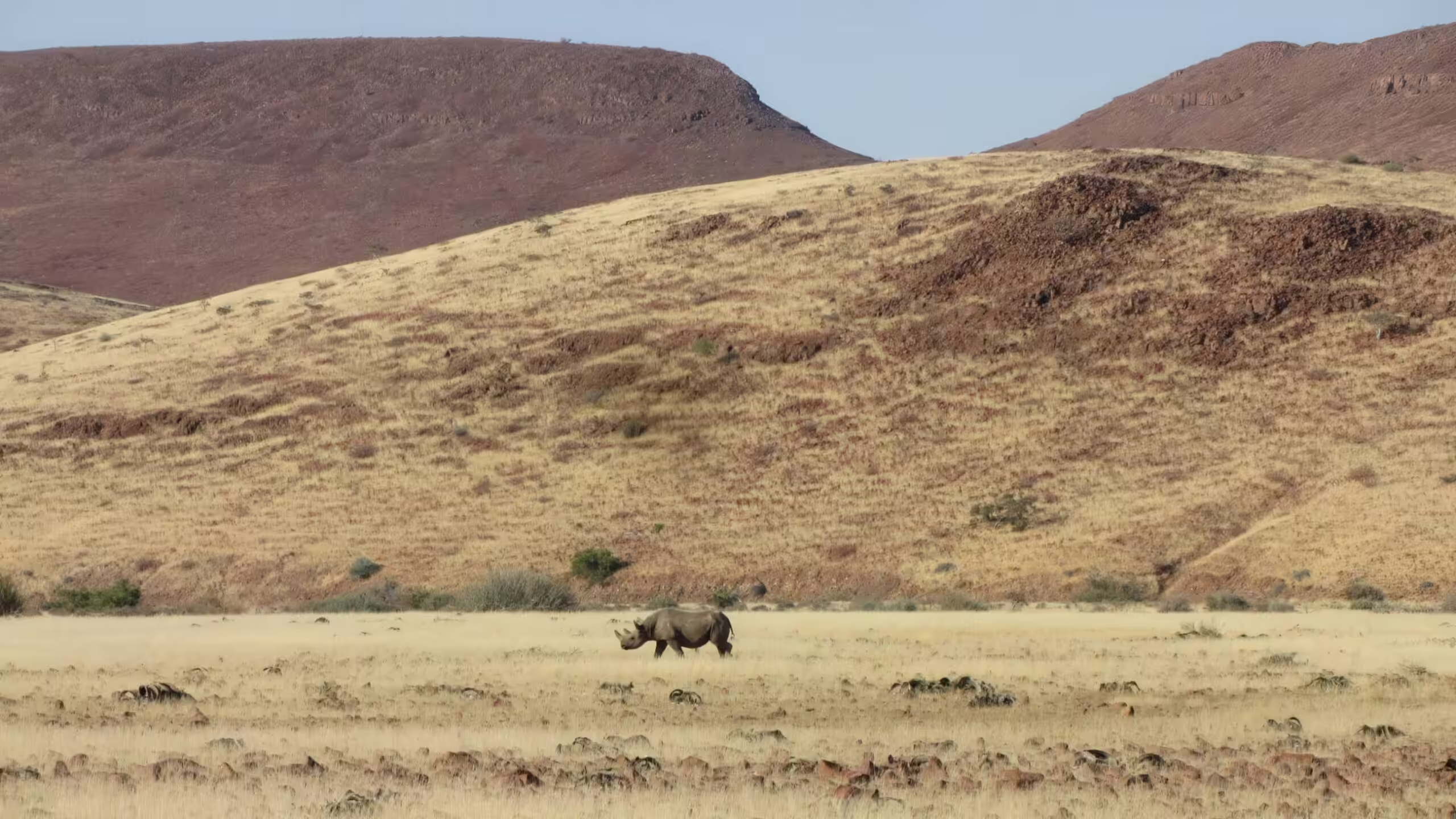
While the patrol teams primarily look for tracks of people and signs of poaching, they also record the animals they see while walking. During their patrols of three of the target conservancies in the latter half of 2025, they recorded 279 Hartmann’s Mountain Zebra, 479 Springbok, 109 Oryx, 68 Giraffe, and 91 Ostrich, among others. While the patrols do not constitute formal game counts, the distribution of the animals they see can be used to plan patrol routes. The game guards are also encouraged by seeing wildlife numbers starting to increase.
Although the patrol is done on foot, the vehicle travelled nearly 1,500 km to and from the points where game guards are picked up or dropped off. This allows them to reach remote parts of each conservancy that would otherwise rarely be visited.
The rough tracks in this area take a heavy toll on even the toughest 4×4 vehicles, and in November the old Land Cruiser broke down. Boas and Dr Margaret (Maggie) Jacobsohn, CEO of CSN, often use their personal 4×4 vehicles to assist CSN where they can. On this occasion, they hired a conservancy member’s vehicle to complete a patrol. The challenges of working in this beautiful yet rugged environment must be met with equal parts of determination and adaptability, which the CSN team have in spades.
Okamutenge is clearly meeting an important need during a critical time when wildlife in the Kunene is starting to rebound. Yet CSN needs more tourism income to expand and continue its support for this project.
Travelling with CSN on a mobile safari and staying at Etaambura Lodge are two ways that visitors to Namibia can both contribute to this work and learn more about it. Visitors that book multi-day expeditions to the Kunene Region get to meet Maggie and travel with Boas and his hospitality team, who generously share their combined decades of conservation experience and insights with their guests.
Tourism and conservation fit together naturally and should form mutually beneficial relationships. As the wildlife rebounds in the Kunene, the tourism product will increase in value. It only makes sense for the lodges and operators to work with their local conservancies and government officials to ensure that this recovery is not hampered by poaching. CSN is leading the way, and they are hopeful that other tourism companies will do their part.
By Gail Thomson