Don’t forget Namibia! Stay in touch…
This site is protected by reCAPTCHA and the Google Privacy Policyand Terms of Service apply.
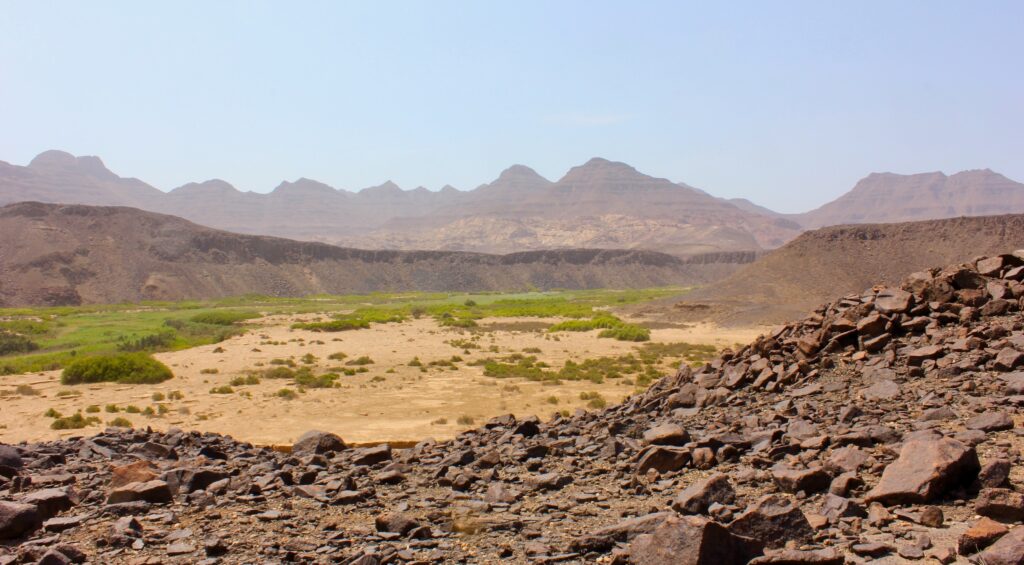
The word ‘river’ usually conjures up images of flowing blue water, fishermen standing on the banks, and boats floating across the surface. For most Namibians, the word ‘river’ means something totally different. The only rivers that match the first description flow along the country’s southern and northern borders. Every other river is dry for most of the year.
If the idea of a dry riverbed doesn’t thrill you, then you haven’t visited Namibia’s northwestern Kunene Region – yet! Even without perennial flowing water these rivers are a source of life. From the iconic desert-adapted elephants and lions to the smallest antelope, many animals would not survive in this wilderness without these rivers.
It should come as no surprise, then, that every safari expedition in the Kunene involves exploring at least three of the major riverbeds: the Huab, Hoanib and Hoarusib. For water-lovers, we recommend throwing in a visit to the Kunene River – one of Namibia’s few flowing rivers, which forms its border with Angola.
At Conservancy Safaris Namibia, we know each of these rivers like an old friend – none of them can be mistaken for another. The landscapes around them, the huge old trees growing within them and the wildlife we encounter while traversing them give each river a ‘personality’ of its own. Let’s introduce you…
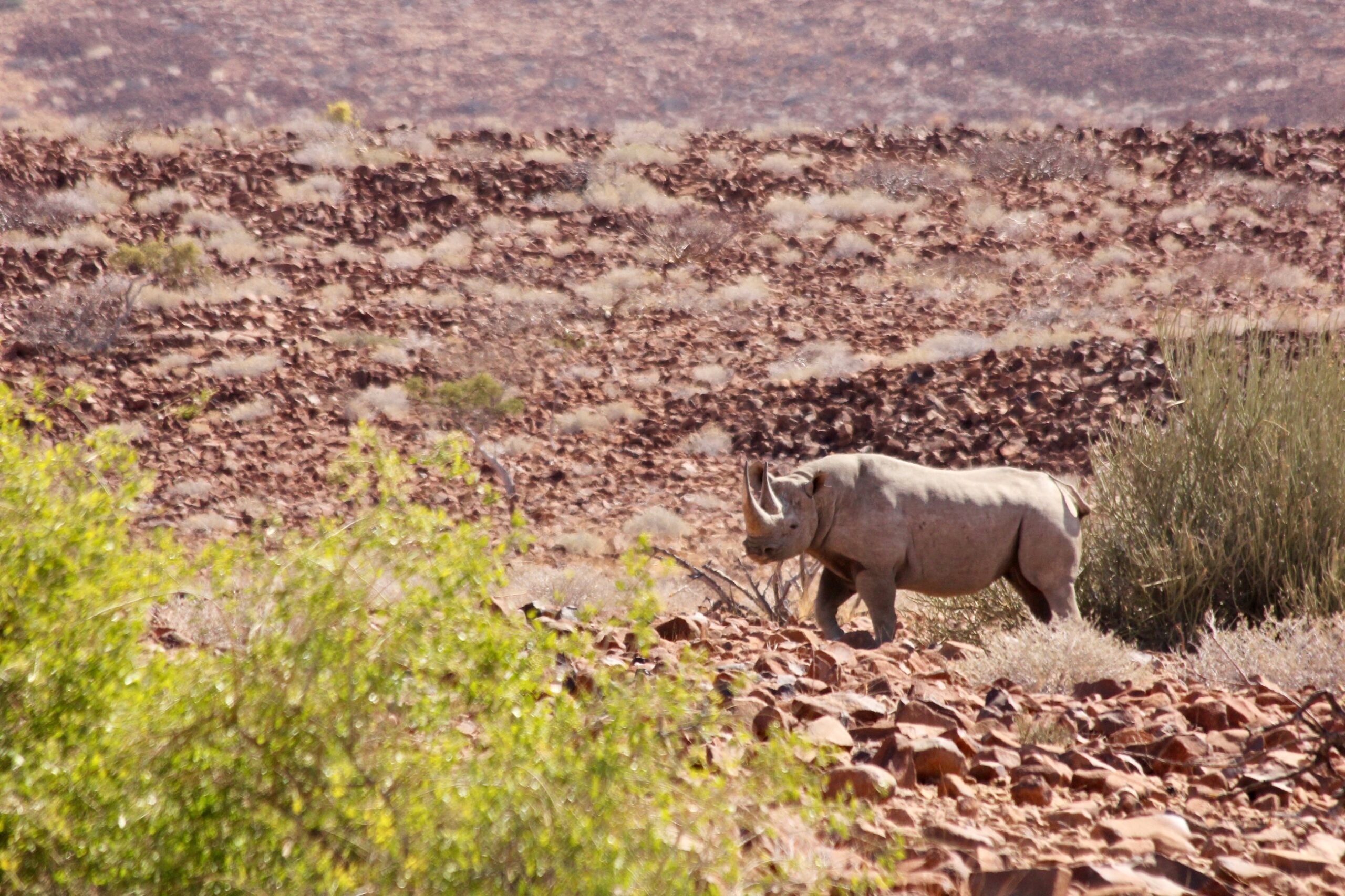
Among north-west Namibia’s ancient rocky landscapes, the landscapes around the Huab River valley are true geological treasure chests. Even if you know nothing about rocks, the astonishing variety of colours – from pitch black to fiery red, and every hue between – will awaken a passion for rocks that you never knew you had!
Fleshy green Euphorbia bushes grow among these many-coloured rocks, providing a splash of colour that brings the barren landscape to life. But Euphorbias are not only photogenic, they provide food for the desert-adapted black rhino. The white, sticky latex that oozes from Euphorbia stems is toxic to humans, yet the rhinos gobble it up with glee.
Namibia’s Huab valley presents photo-worthy landscapes around every corner, as the background colours change from black, to red, to yellow. The chance of seeing a rhino meandering through such a gorgeous rocky backdrop adds to the anticipation and excitement of the journey. While rhinos usually drink at night and are therefore rarely encountered within the riverbed itself, elephants and other wildlife frequently visit the small pools in the river to slake their thirst. Antelope and other animals that drink at these pools attract lions, which roam the Huab valley in search of prey.
One of the lesser-known secrets of the Huab is its petrified ‘forest’ – huge beds of fossilised trees that were washed down from forests that existed in Namibia’s distant geological past. Without a guide, you may drive straight past these trees, thinking that they are just odd-looking rocks.
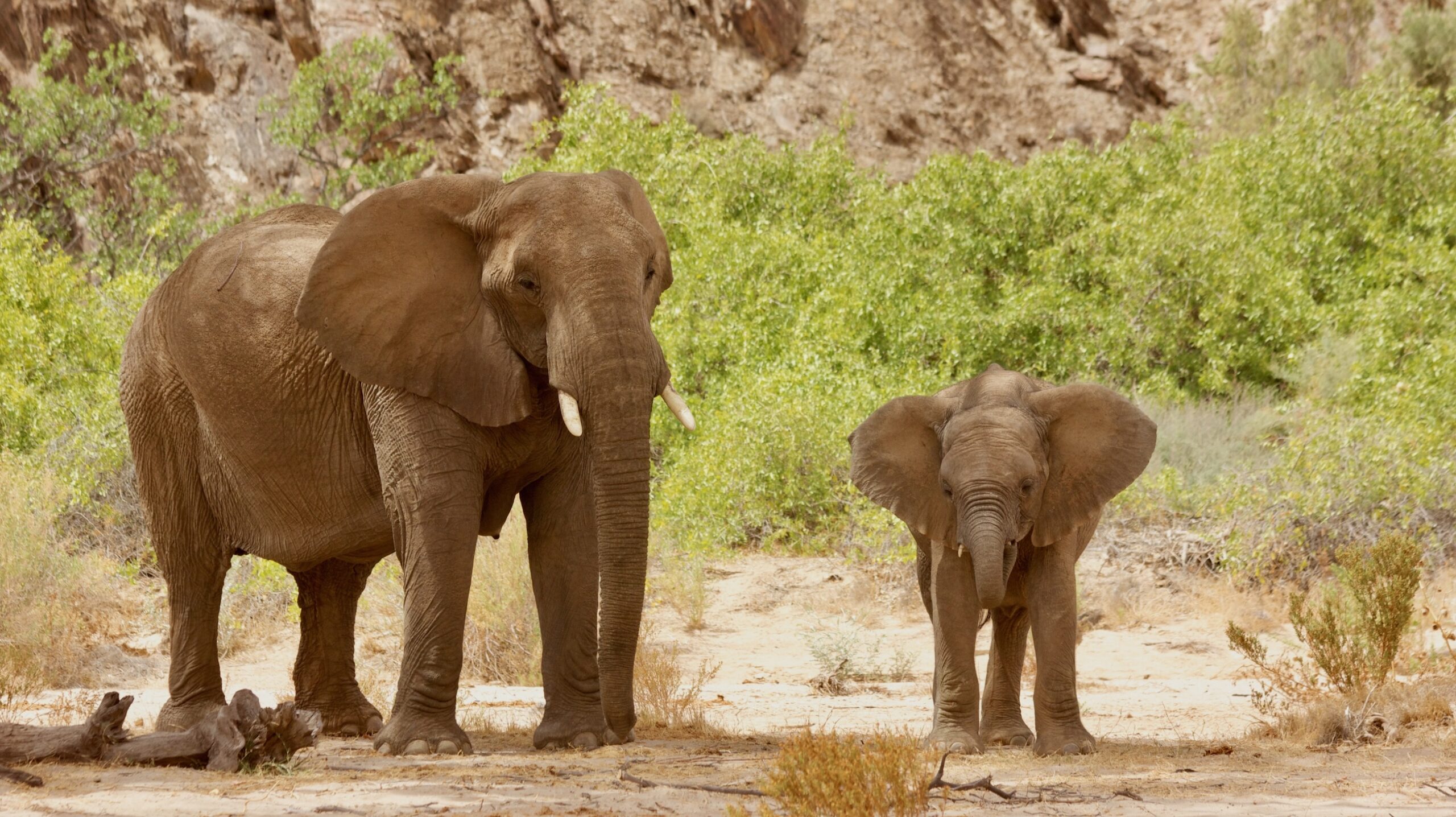
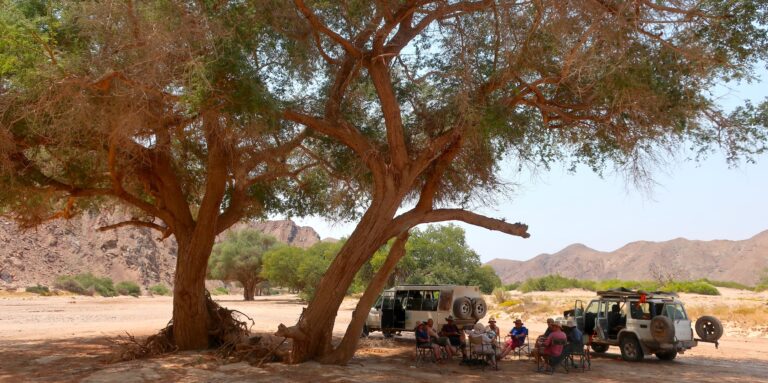
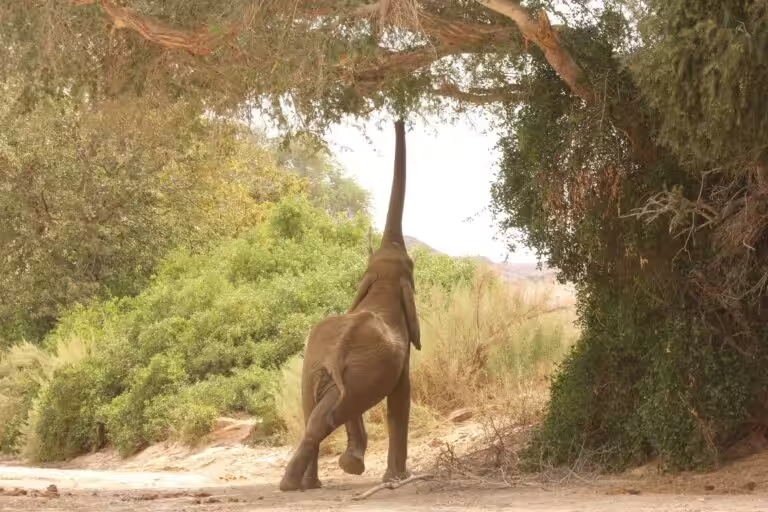
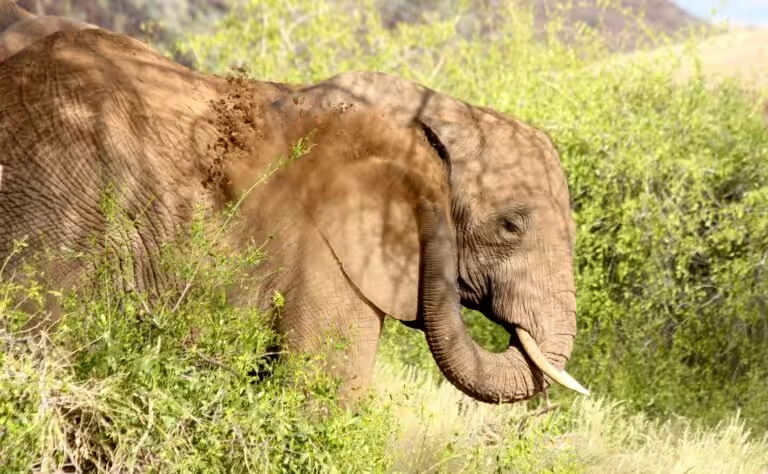
While desert-adapted elephants enjoy all of the Kunene’s dry riverbeds, the Hoanib River is a special place for elephants. This river hosts a permanent supply of clean water, along with nutritious seed pods dropped by towering Ana trees growing in its bed. Both fresh water and Ana pods are high on the list of an elephant’s favourite things.
The water is provided courtesy of a couple of permanent water holes that have been pumped for many years, so the elephants know that they can rely on them. The huge Ana trees have been here for much longer, and their pods attract many animals besides the elephants.
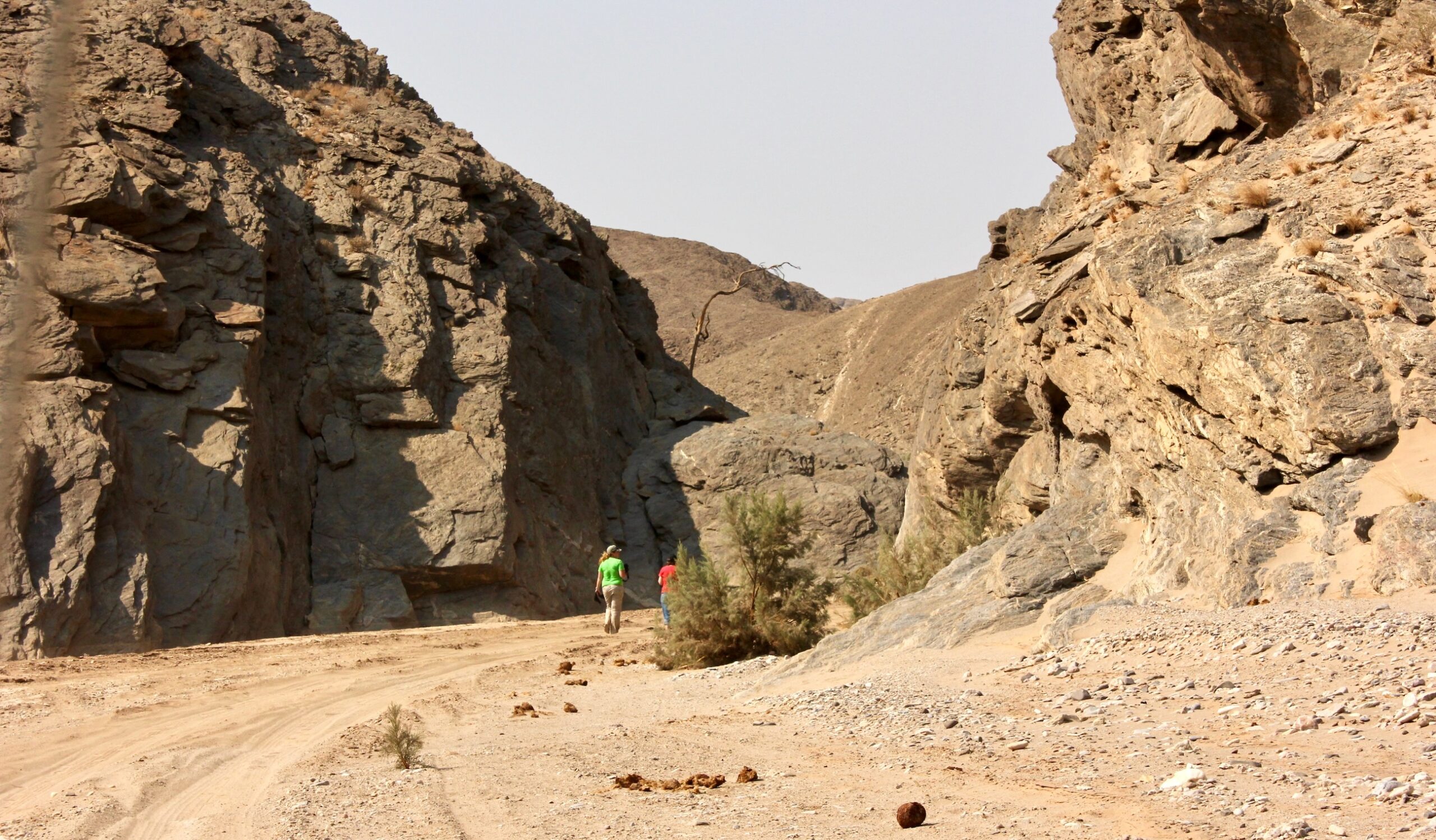
Driving down the Hoanib is a wonderfully Namibian adventure in itself, as you pass through narrow gorges and sandy stretches. A gorge in the upper reaches of the river, known as the Khowarib Schlucht, is a particular highlight for 4×4 enthusiasts. The cliffs of the Schlucht are ancient coral reefs – offering another fascinating glimpse into the earth’s geological history. If you visit this area with our guide, he will show you hidden mini-waterfalls and pools where one can take a quick dip in the heat of the day.
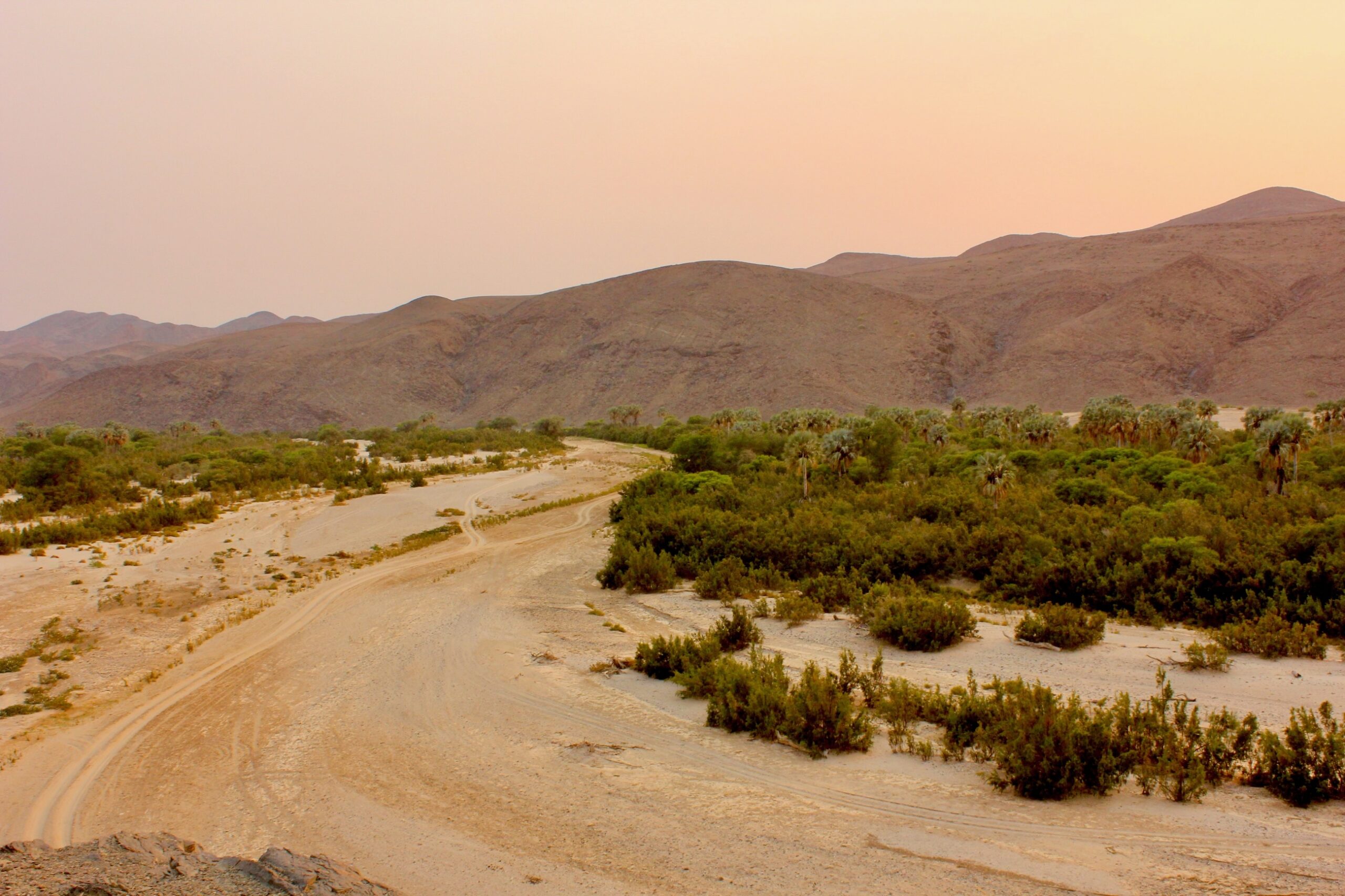
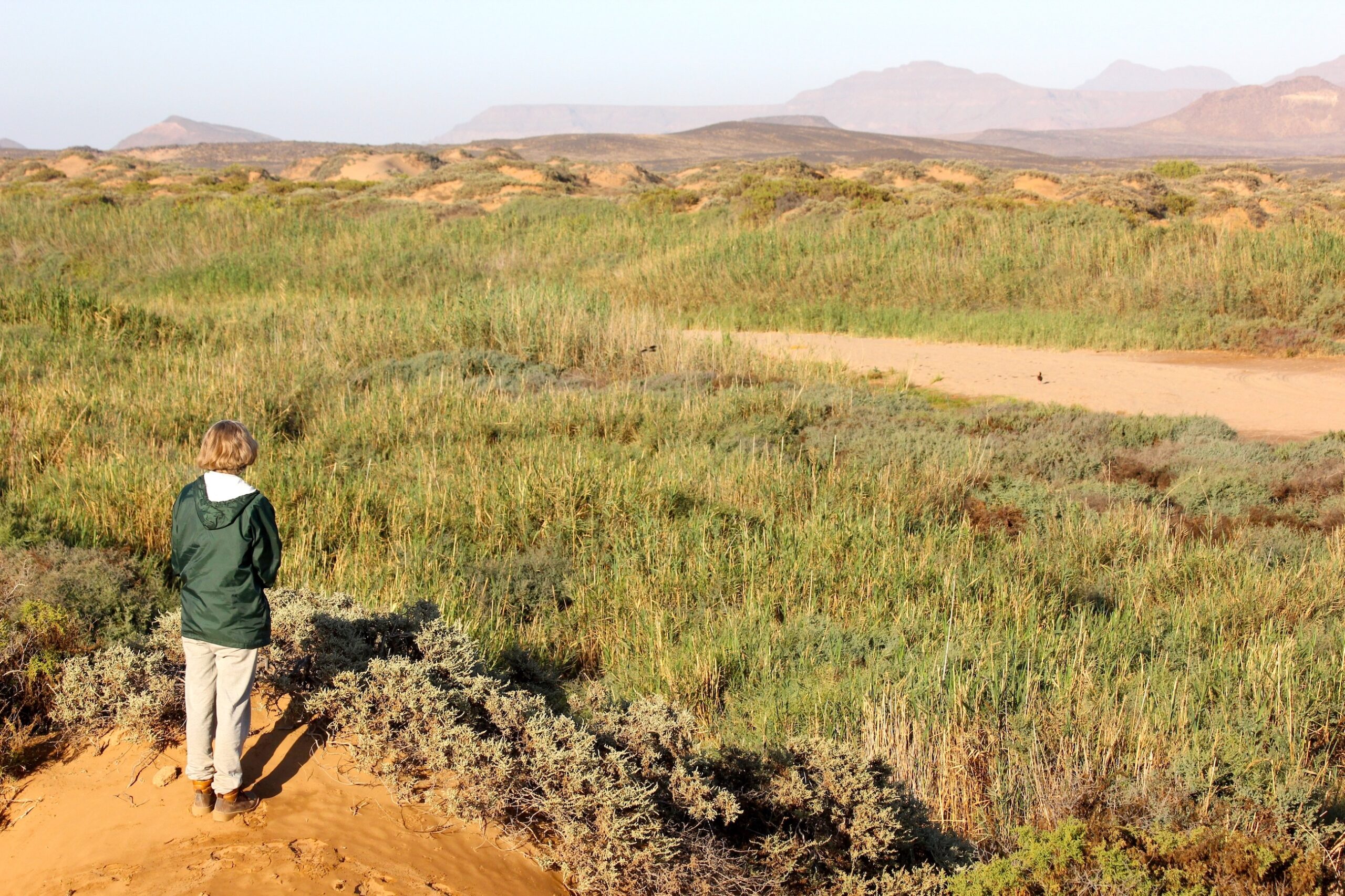
The Hoarusib is characterised by natural desert oases, complete with palm trees and dense bush. While Namibian rivers are dry on the surface, they act as sponges that keep water close to the surface all year round. The oases provide bushy green evidence of this fact! Small pools of water can be found among the greenery, which are magnets for wildlife and great for a quick paddle.
The landscape around Namibia’s Hoarusib River is especially stark and barren during the dry season, forcing many animals to rely on the oases for survival. Giraffes are commonly seen meandering along the Hoarusib, enjoying fresh green leaves from the plants that have put their roots down into the riverbanks.
This river also provides an excellent opportunity for cultural tourism, as it is home to the village of Purros. Here, OvaHimba people gather to share the news of the day, water their goats, and enjoy a bit of socialising – a precious commodity for these semi-nomadic peoples. Pop in to Purros with your guide to get a taste of village life.
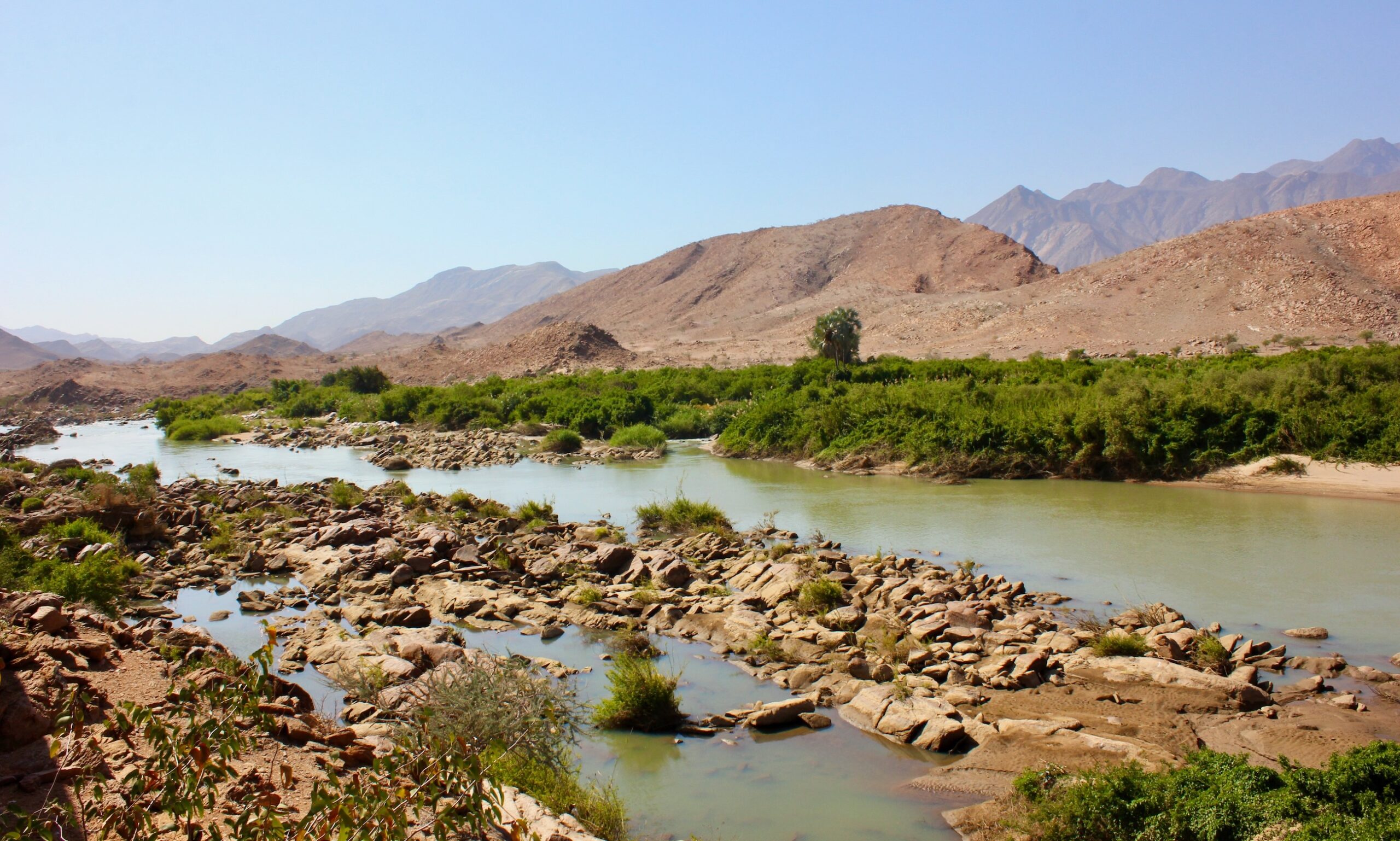
As the only river in the region with flowing water all year round, it’s no wonder that the whole region was named after it. After spending many enjoyable days exploring Namibia’s dry riverbeds, hopping from one small pool to the next, the Kunene River is an unexpected delight. The blue stripe on your map simply won’t prepare you for the first sight of a flowing river cutting its way through the desert.
With flowing water comes danger, however, as crocodiles love hanging out in the calm parts of the river that look most attractive for a quick swim. Whatever you do, resist the urge to jump in and cool off. Instead, admire the river’s beauty from the safety of its banks. Paradoxically, the ‘dry’ river pools provide better opportunities for a quick dip than the only flowing river!
Although the Kunene is unique among the rivers we’ve described here, it shares something in common with all of them: spectacular desert scenery. Our guides know some beautiful drives to and from the river that will reveal its most secluded beauty spots.
Question: Can I camp in Namibia’s dry riverbeds?
Answer: While the rivers may make tempting campsites, pitching your tent in a riverbed is a bad idea. The abundance of wildlife using this river will put your camping party on a collision course with some dangerous animals – the last thing you want to encounter while using the ‘bathroom’ at night is an angry elephant or hungry lion! Even if you don’t have a dangerous encounter, your presence disturbs the animals’ natural use of the riverbed, which is critical to their survival.
Question: Can I camp wherever I want in Namibia’s Kunene Region?
Answer: Wherever possible, support community-owned campsites. Do a bit of research before you go to find campsites that are currently operating. Every dollar you spend at such campsites supports the communities living in this area.
Question: Is it safe to explore the Kunene Region in Namibia on my own?
Answer: Ideally, travel in convoy and do not plan to go too far each day. Part of the joy of exploring the Kunene are the rocky and sandy roads that challenge ardent 4×4 enthusiasts. But this is also part of the risk. If you get stuck or have a flat tyre, be sure to have a back-up plan.
Question: What time of year is best for exploring Namibia’s rivers?
Answer: Most of the year is good, but be extra careful during the peak of the rainy season (January to March). Namibia’s dry riverbeds can be flooded with water at a moment’s notice. A vehicle or tent can easily be washed away by these powerful flash floods – do not underestimate them! Even when the river dries up after the rainy season, treacherous patches of quicksand remain that can easily trap your vehicle.
Question: Do I need a guide to explore Namibia’s Kunene Region?
Answer: While guides are not compulsory, a good guide will help you to get the most out of Kunene’s spectacular rivers, while minimising the risks and avoiding the hazards in this vast wilderness. Our Namibian guide and his team know the rivers intimately, and have many years of experience with driving on these tricky roads and tracks. We will plan your stay at the best campsites or lodges based on our knowledge and experience combined with your group’s safari preferences.
Question: How do I book with Conservancy Safaris Namibia?
Answer: To find out more about how you can book our guide to accompany you on your journey, or to plan a fully-catered expedition with us, check out our Expeditions page.